Nonfiction · September 2026
Why I’m Writing Okay… I’m Sober. Now What?
Getting sober answered one enormous question. It also introduced a hundred smaller ones.
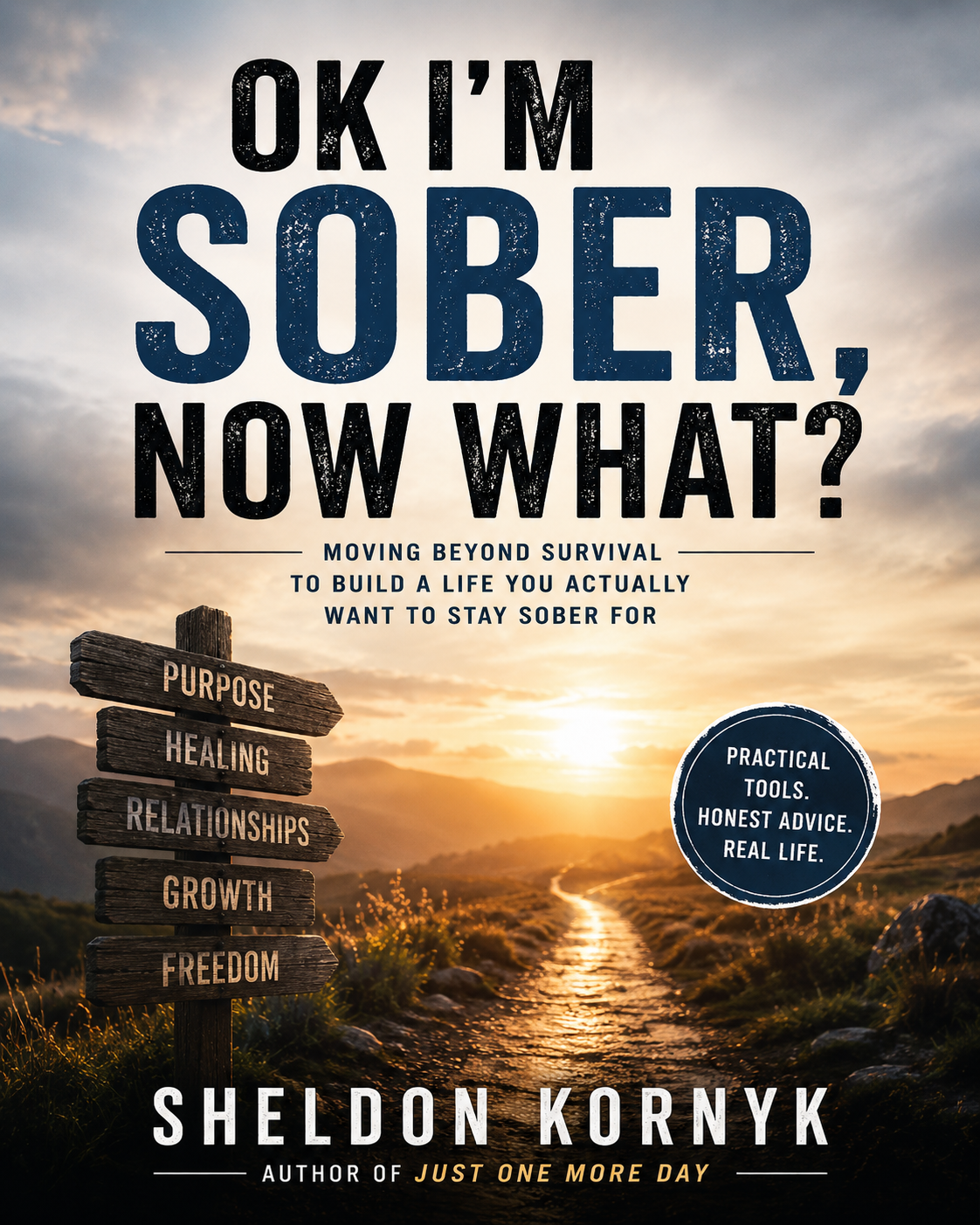
For years, survival had been the goal. Find somewhere to sleep. Find food. Get through the night. Eventually, with a great deal of help, the goal became treatment. Stay. Listen. Learn. Get sober.
Then treatment ended.
I moved into second-stage housing with a room of my own, food in the cupboards, people nearby who cared whether I showed up, and enough stability to begin looking farther ahead than the end of the day.
It should have felt like the finish line.
Instead, I discovered it was the starting line for something entirely different.
The Question After Recovery
Okay. I’m sober. Now what?
Treatment helped me understand cravings, trauma, boundaries, accountability, and some of the reasons I had spent so many years trying to escape what I felt.
But when I walked into my own apartment, there wasn’t a manual sitting on the kitchen counter explaining the rest of life.
How do you repair relationships after years of absence? How do you rebuild trust when saying you’re sorry doesn’t erase what happened? How do you manage money again? Spend an evening alone? Deal with boredom? Grief? Shame? Responsibility? How do you learn to believe your own promises again?
And perhaps the biggest question of all: what kind of life are you trying to stay sober for?
Ordinary Victories
Recovery doesn’t always look dramatic.
Some of the moments that matter most now would once have seemed completely unremarkable to me.
Showing up for a kitchen shift. Washing dishes. Cleaning a hallway properly. Keeping an appointment. Stocking groceries in a cupboard and believing the food will still be there tomorrow. Cooking dinner for friends. Answering when one of my sons calls and asks for help.
There was a time when my life had been measured in businesses, contracts, travel, houses, vehicles, and everything I thought success was supposed to look like. Recovery after homelessness and treatment has forced me to reconsider the scale.
Sometimes progress is much quieter.
Finish the shift. Keep the promise. Make the meal. Clean the room. Answer the phone. Go home sober.
Recovery in the Real World
Knowing the tools and needing them are two different things.
One afternoon, I was simply trying to barbecue steaks for a friend. A dirty grill, an empty propane tank, a trip past a familiar building, and memories of everything I’d lost turned an ordinary afternoon into a serious craving.
Nothing about it looked dramatic from the outside. I was standing at a barbecue. Inside my head, I was suddenly much closer to the life I had escaped than I wanted to be.
I slowed my breathing. I used one of the tools I had learned in treatment: play the tape forward. Instead of stopping the story at the promise of relief, I forced myself to remember what came afterward—the next hit, the money disappearing, losing my housing, losing the stability I had begun rebuilding, and having to tell the people who had stood beside me what happened.
Then I told someone what was happening instead of pretending I was fine.
The craving eventually passed. The steak was still pretty damn good.
That is the kind of recovery I want this book to show: not a perfect person who has somehow graduated from addiction, but someone learning how to use what he has been taught when ordinary life suddenly stops feeling ordinary.
A Different Kind of Memoir
This time, I don’t know the ending yet.
JUST ONE MORE DAY required me to look backward through decades of my life—childhood, family, business, addiction, homelessness, loss, treatment, relapse, and the long struggle back.
OKAY… I’M SOBER. NOW WHAT? is different.
I’m writing much of it while the life I’m describing is still happening. I live something, sit down at the desk, and try to understand it while the details are still fresh.
A kitchen shift. A difficult craving. An afternoon working on my son’s boat. A birthday. A conversation. A mistake. Something that makes me laugh. Something that scares me. Something ordinary that turns out not to be ordinary at all.
With my first memoir, I knew what happened next.
With this one, I’m still finding out.
What This Book Is About
Moving beyond survival.
This isn’t intended to be a textbook on addiction or a list of instructions from someone claiming to have recovery figured out.
It is one man’s experience of trying to take what he learned in treatment and carry it into the rest of life.
The book follows relationships, family, rebuilding trust, daily routines, cravings, responsibility, grief, humour, money, housing, purpose, friendship, mistakes, accountability, and the small victories that slowly begin to resemble a life.
Some chapters are serious. Some are funny. Some are both, because life rarely has the courtesy to organize itself by genre.
Why write it?
Because I suspect I’m not the only person who discovered that stopping was only part of the problem.
There are people leaving treatment wondering how they’re supposed to fill an evening. Parents trying to understand why someone they love can be sober and still struggle. Sons and daughters trying to decide whether they can trust again. People rebuilding lives that don’t resemble the ones they lost.
If someone recognizes themselves in these pages, feels a little less alone, laughs at one of my mistakes, or finds something useful enough to carry into their own day, then the writing will have been worthwhile.
Surviving was only the beginning. Learning to live again became the real journey.
