Prologue
The Bridge
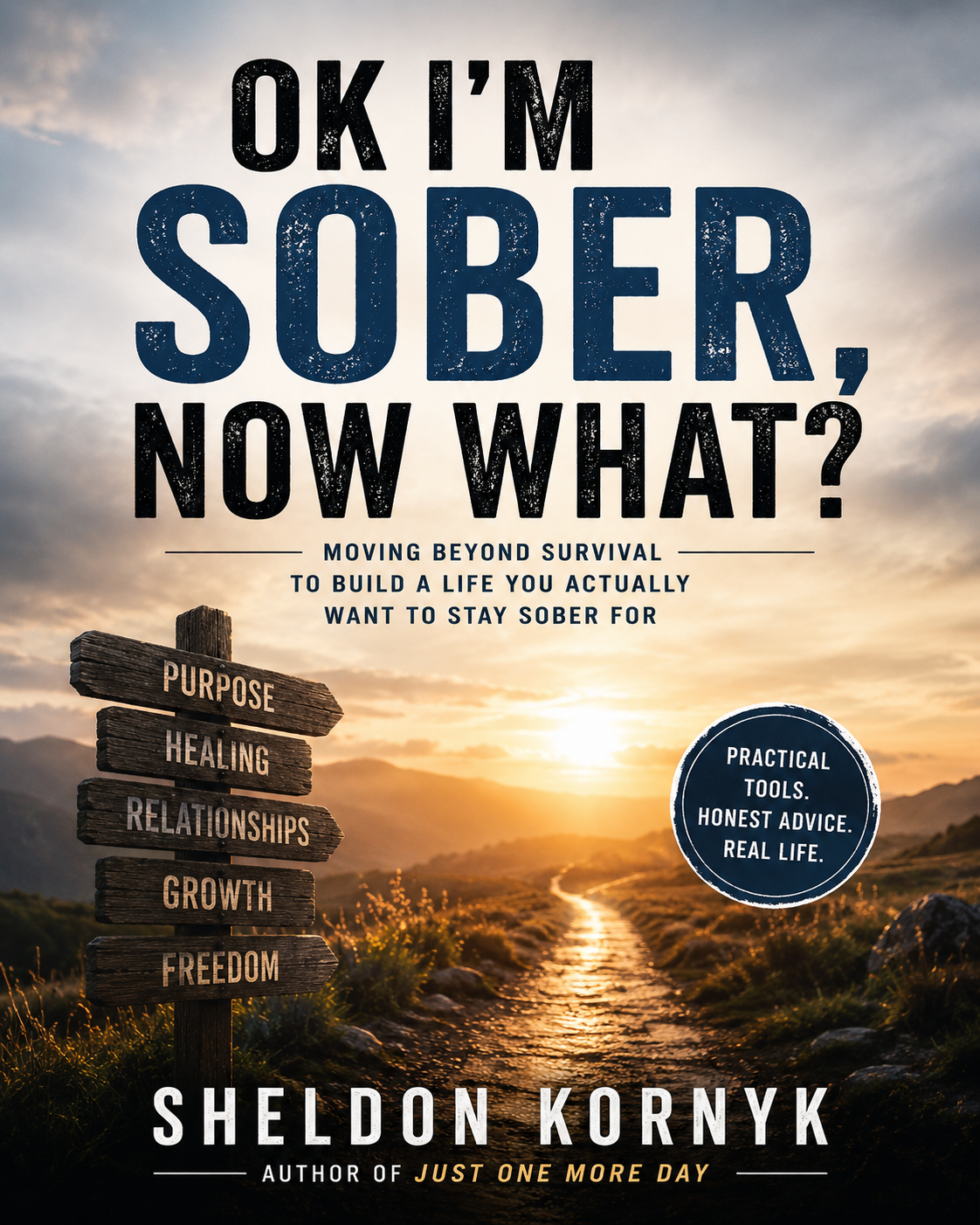
Okay… I’m Sober. Now What? opens with a quiet morning in second-stage housing—a bed, an open window, a walk by the airport, and the unfamiliar feeling of having somewhere to call home.
I woke up and stared at the ceiling. For a few seconds, I lay still, trying to work out what felt different.
I wasn’t cold. I wasn’t cramped. Nobody was moving around me, and no voice in the hallway was telling me to get up. When I turned toward the clock, it was eight-thirty. I’d slept straight through.
During the years of addiction and homelessness, sleep had rarely meant letting go completely. Some part of me stayed alert to footsteps, to the whereabouts of my belongings, to the cold working its way through my clothes. Even with my eyes closed, there had been things to worry about.
This morning, I had to search for something wrong. I couldn’t find it.
The bedding was new. So was the blanket. Beneath them was my own bed, and I knew I could sleep in it again tonight. I stayed there a little longer, getting used to that thought.
Eventually, I sat up, took my morning medication from the drawer beside the bed, and began straightening the blankets. I smoothed the wrinkles and adjusted the pillows. Then I stood back and admired my work.
After years of sidewalks, shelters, doorways, and SkyTrains, I was becoming a man who stood around admiring his blankets.
I smiled. Apparently, this was progress.
I made toast and opened the blinds. Sunlight spread across the room. Beyond the window, airplanes taxied at the airport. I watched one lift off and another come in to land, eating slowly, with nowhere I needed to rush.
Airplanes used to mean business trips: first-class seats, meetings in Australia or Europe, another contract, another destination. Now I was watching them from a four-hundred-and-fifty-square-foot studio in second-stage housing. I couldn’t remember feeling this grateful in first class.
After breakfast, I showered and put on clean clothes. Yesterday’s clothes went into the laundry basket. I didn’t have to put them back on because they were the least dirty things I owned.
I washed my dishes, wiped the counters, and straightened the kitchen. The night before, I’d tucked a Gain dryer sheet into the window. Its clean-laundry scent had drifted through the apartment. The walls were spotless; only one person had lived here before me. I kept looking around, taking inventory of things most people wouldn’t think to count as good fortune: clothes in drawers, food in a cupboard, a bathroom I could use in privacy.
For six years, stability had belonged to other people. Now I could stand in the middle of it.
My eyes settled on the plant Shaelene had given me. Its leaves reached toward the window, and her card sat beside it. I picked the card up and read it again. I’d already read it the night before, more than once. I wasn’t finished with it yet.
I lightly sprayed the leaves. The plant and I had both been moved somewhere new and given a chance to settle. I hoped we would do well here. At least one of us appeared to know what it was doing.
Then I headed downstairs and walked outside. No pass request. No need to explain that I wanted to go for a walk. I could turn toward the street simply because I felt like it.
There were still boundaries: an eleven o’clock curfew on weeknights, midnight on weekends, meetings, chores, random urine tests, and occasional room checks. I had chosen second stage because I wanted that structure. Inside it, though, there was room to make a life of my own.
I made my way around the corner toward the airport fence. The sun warmed my face, and a breeze moved through the summer air. I wasn’t searching for food or shelter. I wasn’t going to find drugs. I had somewhere to return to when I was done.
Near the fence, I stopped to watch the planes. And there, in the middle of a morning I wanted to share, I thought about Nicole Manning.
“I made it, Nicole,” I whispered. The words caught somewhere in my chest.
“I made it.”
I wished she were alive to see me sober. She had pushed me toward help, and now I had my own bed, my own little apartment, and plans that reached beyond the end of the day. I wanted her to know I had kept going.
“I wish you were here to enjoy this with me.”
I swallowed hard.
“I miss you.”
The breeze brushed my face. “I’ll always remember you.”
I stood quietly for a while. Then I thought of Grandma, who had been one of the safest people in my childhood.
“I sure miss you too, Grandma.” I looked toward the sky. “I hope you’re proud of me.”
There was no answer. Still, I was glad I’d said it. Being grateful for what I had didn’t stop me from missing the people who couldn’t be here.
I walked on toward Tim Hortons, about twenty-five minutes away. Cars passed. The pavement was firm beneath my shoes. An ordinary summer morning went on around me, and I had the time and freedom to be part of it.
I bought an iced coffee and carried it outside. It was cold and sweet and familiar. Then I turned toward home.
I was still getting used to that word.
Finishing treatment hadn’t answered every question. I’d learned about cravings, trauma, boundaries, and accountability. I’d begun to understand what happened to me when pain arrived and I wanted it gone. But there was no manual waiting in my apartment for the rest of living.
How was I supposed to repair my relationships? Manage money? Trust people? Spend an evening alone without turning loneliness into a reason to use? Who was I now that I was neither the businessman I’d once been nor the man struggling to survive on the street?
For most of my life, my answer to difficulty had been to work harder and handle it myself. That determination had helped me build a company. It had also made it hard to admit when I was in trouble. I could carry a problem a long way before I let anyone see how heavy it had become.
This time, I wanted people close enough to notice. I knew how persuasive my thinking could get: You’re fine. You don’t need anyone anymore. One won’t hurt. I’d followed those thoughts before. I wasn’t willing to trust them with the life I was starting to rebuild.
As I walked back toward the Bob Sutton Centre, iced coffee in hand, I thought about what was waiting for me. There were dishes to wash and meals to cook, money to stretch, relationships to tend. There was even a plant depending on me to remember the water.
For years, I had concentrated on getting through another day. Now I expected to wake up tomorrow, and I wanted to do something with it.
Okay. I’m sober.
Now what?
OK I’m Sober, Now What?
A Memoir of Learning to Live Again
Getting sober was only the beginning. From a room of his own to the ordinary challenges of routine, family, grief, belonging and making choices without escaping into addiction, Okay… I’m Sober. Now What? follows the difficult work of learning to live again.
Excerpt from Okay… I’m Sober. Now What? — A Memoir of Learning to Live Again by Sheldon Kornyk.
Copyright © 2026 Sheldon-Gary Kornyk. All rights reserved.
